
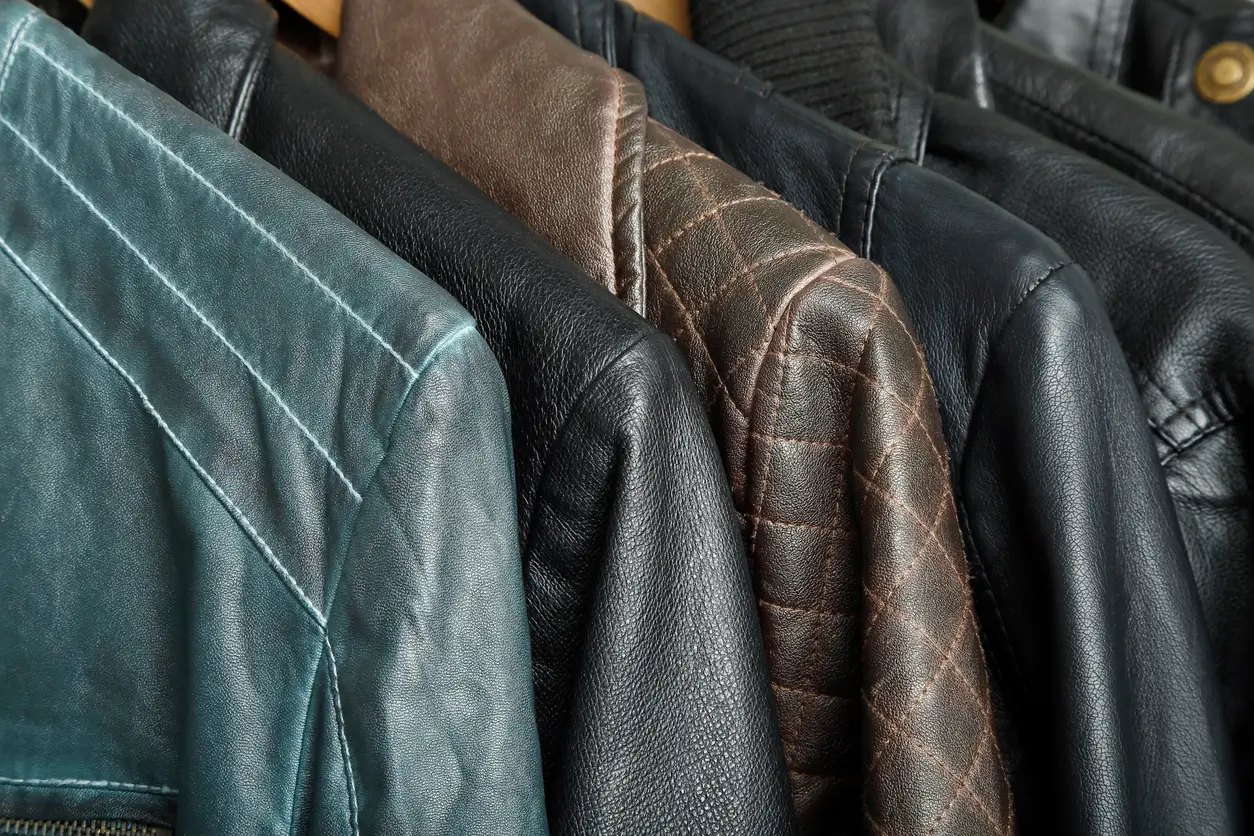

The most common source of leather jacket damage isn’t neglect. It’s intervention. A dry patch that gets hit with olive oil. A scuff that gets scrubbed. A stiff area that gets conditioned with whatever was under the sink. Each of these comes from someone who noticed something and wanted to help.
The problem is that leather is specific. What fixes one thing breaks another and the difference between a mark worth treating and one worth ignoring isn’t obvious if you don’t know what you’re looking for.
This guide tells you what each characteristic actually is before suggesting what to do about it.
Patina vs. Fading: The Difference Between Earned Color and Sun Damage
Patina is leather doing what it’s supposed to. It’s the slow, even darkening or lightening that comes from oils in your skin, from handling, from the leather simply being worn against your body over years. It shows up first at contact points: cuffs, the inside of the collar, wherever your bag strap sits.
Fading is different. It’s caused by UV exposure, and it shows up as patchy, directional lightening, usually worse on one shoulder or across the back if the jacket has been hung near a window or left in a car.
Which leathers are most vulnerable: aniline and semi-aniline leathers are most susceptible to UV fading because their dyes sit closer to the surface with minimal protective coating. Pigmented leathers resist UV better because of the top coat applied during finishing, but they aren’t immune to extended exposure.
How to Read Directional Damage on a Garment You Wear Asymmetrically
Bags on one shoulder, an arm resting on the same door panel, hanging the jacket the same way every time – all of this creates uneven wear with zero damage involved. Before calling something faded, check your own habits first. Asymmetric wear from habit is normal. A hard edged line, one panel dramatically lighter than the rest, exactly where a hanger or curtain sat, points to sun damage instead.
What to do: patina needs nothing. Sun fading needs a leather-specific conditioner with UV protection, and going forward, keep the jacket out of direct sunlight when it’s not being worn.
The ‘Move to the Light’ Test That Tells You Which You’re Looking At
Here’s the fastest way to settle the patina versus fading question without guessing. Take the jacket to a window with natural daylight, not a lamp, and look at the color change from two distances.
- Hold the jacket at arm’s length in natural light and look at the overall tone.
- Move it closer and look specifically at the grain texture, not just the color.
- Compare a high-wear area (elbow, cuff) to a low-wear area (inside the sleeve, under the collar).
Patina shows a color shift, but grain texture stays consistent between both areas. Fading shows a color shift and a grain that looks flatter or chalkier, since UV breaks down the finish, not just the color.
Why Indoor Lighting Gives You a False Reading
Fluorescent and LED bulbs shift color temperature enough to make even leather look uniformly warm or cool, which hides the subtle patchiness that shows fading. If you’ve been inspecting your jacket under indoor lights and thought it looked fine, don’t trust that read. Daylight, ideally overcast rather than direct sun, is the only lighting condition that shows true color accurately.
Creases and Wear Lines vs. Actual Cracks in the Grain
Creases at the elbows, across the back, or at the collar fold are just leather memory, the material holding the shape your body repeatedly puts it in. The surface stays smooth even where it folds.
A crack is different. The grain itself splits, leaving a fine white or lighter line inside the crease, sometimes with a raised or rough edge. That’s internal fiber showing through. It doesn’t happen from folding alone; it happens when folding meets dryness.
The One Detail Most Owners Miss: Crease Color vs. Crack Color
A healthy crease matches the surrounding leather color, just compressed. A crack shows a lighter or duller line, exposed fiber instead of finished surface. Run a finger across it: no color change means wear. A pale line that holds no matter the angle means a crack, and it will worsen with continued folding in the same spot.
What to do: creases need nothing. Cracks need conditioning immediately to stop the split from spreading, and if the crack has already opened up, it needs a professional assessment before more wear makes it worse.
Softening and Slouching vs. Dryness That’s About to Split
New leather is stiff. Over months of wear, it softens and drapes with your body instead of holding a rigid shape, a desirable sign of a well broken jacket that moves like fabric at the flex points.
Problematic dryness feels different from softness. It shows up as thin rather than soft, papery instead of supple, with a powdery or ashy look in high-stress areas instead of a smooth sheen.
Knowing how to keep a leather jacket from cracking starts with catching dryness before it becomes structural. Most leather craftsmen recommend conditioning every six to twelve months for a jacket in regular use. By the time the jacket feels papery, the oils are already depleted enough that cracking is near-term rather than hypothetical.
The ‘Sound’ Test Nobody Talks About
Sound is a useful third check most guides skip. Flex a healthy, supple jacket near your ear, and you’ll hear little, maybe a soft creak. Flex a dry, distressed area, and you’ll often hear a faint crackling, like crumpling stiff paper. Hearing it before you can see it counts as an early warning sign, not a false alarm.
The Bend Test: What the Leather Should Feel Like When You Flex It
This is the single most reliable at-home diagnostic in this guide, because it tests structural health rather than appearance.
- Take a section of the jacket, ideally somewhere less visible such as an underarm panel or inner cuff.
- Fold it gently in half, grain side out, the way it would naturally crease if worn.
- Hold the fold for two to three seconds, then release.
- Watch how it releases: healthy leather springs back or relaxes smoothly with no visible marking.
Dry or damaged leather releases slowly, leaves a visible crease line that lingers, or shows that pale internal color mentioned earlier.
Testing Multiple Zones Instead of Just One
A jacket can be healthy in the body but dry at the elbows and cuffs, the highest flex points and first to lose moisture. Don’t rely on one bend test and assume the whole jacket is fine. Test the elbows, collar fold, and cuff separately, since these zones age at different rates on the same garment.
Scratches and Scuffs vs. Deep Cuts and Missing Finish
Surface scratches are part of leather’s story. Most fade to nearly invisible with basic conditioning, since they only affect the topcoat, not the hide underneath.
A deep cut or gouge is structural. The finish is actually missing, with a visible groove or the suede-like underside exposed where the top layer has been sliced or scraped away.
The Fingernail Test for Depth
Run a fingernail lightly across the mark. Catching or snagging means the damage goes deeper than the surface finish. Gliding smoothly over a purely visual mark means it’s cosmetic. This one test prevents over-treating a light scuff or under-treating a mark that needs repair, since visual severity and actual depth don’t always match.
What to do: surface scratches can often be buffed out at home with a soft cloth and light circular pressure, or with a small amount of conditioner. Deep cuts and missing finish require professional repair.
Darkening From Body Oil vs. Water Stains and Salt Rings
Natural darkening from body oil is gradual and even, concentrated at collars, cuffs, and underarms. It’s part of the same patina process, with a slight sheen rather than a dull or blotchy look.
Water stains and salt rings are different, common in colder or rainier climates. Water stains show up as darker, ring shaped or blotchy marks with a harder edge, drying stiff. Salt rings, from road salt or sidewalk treatment, dry as a pale, chalky, crusty residue, nearly the opposite look of a water stain.
Why Drying Method Matters More Than the Water Itself
The stain itself is rarely the real problem; how the jacket dries afterwards is the challenge. Drying near a radiator, heater vent, or in direct sun pulls out moisture unevenly and stiffens exactly where the water sat, locking in a stain that would have otherwise faded.
If your jacket has gotten wet, air-dry it at room temperature, away from any heat source, before deciding a mark is permanent.
Lining Wear, Zipper Wear, and Hardware Patina: What’s Cosmetic and What Isn’t
The lining, zippers, and hardware age separately from the leather itself, and owners often panic about one while ignoring the other.
- Lining: thinning, minor pilling, or loose threads are cosmetic. Lining tearing away from the seam attachment point is a repair issue.
- Zippers: a duller or tarnished pull is patina. Snagging, skipped teeth, or a zipper that won’t stay closed is functional and needs replacement before repeated forcing damages the surrounding leather.
- Hardware: snaps and buckles naturally dull, matching the leather’s aging. Rust, greening, or hardware pulling away from its mount is structural.
Why Hardware Failure Often Damages Leather Indirectly
A loose snap or separating zipper pull rarely stays small, since the leather around it takes the stress every time you force it. That stress point is exactly where a crack develops next, even on leather that started out healthy. Catching hardware issues early protects the leather around them, not just the hardware.
Signs You Should Stop Wearing the Jacket Until It’s Been Cleaned or Conditioned
Most of what’s covered above is fine to live with while you plan your next conditioning session. A smaller list of signs means you should pause wearing the jacket until it’s been properly addressed:
- A crack has progressed to the point where you can see light through it or feel a genuine gap, not just a pale line.
- The leather feels papery or brittle across a large section, not just one flex point.
- A water or salt stain has stiffened the material rather than just discoloring it.
- You can hear consistent crackling across multiple areas during the bend test, not just one spot.
- The finish is missing in a large area, exposing raw hide to weather and dirt.
Continuing to wear and flex the jacket at this point speeds up damage rather than wearing it in. Conditioning alone often isn’t enough here; professional cleaning and conditioning is the difference between saving the jacket and losing it.
Cracked, Stained, or Faded? Columbus Dry Cleaning & Laundry Services Restores Leather the Right Way
Still staring at that mark, unsure which side of the line it’s on? You don’t have to guess alone.
We’re Columbus Dry Cleaning & Laundry Services, and for leather cleaning in Columbus, Ohio, we work with a trusted leather specialist to make sure your items get the care they need. It’s a partnership you can count on, built to protect your leather the right way. Whether it’s a jacket, handbag, boots, or suede accessories, we’ll get you an honest read from someone who truly knows leather.
Bring in your jacket, or give us a call, before another wear makes the decision for you.


